
What Is Crown Gall?
Crown gall is a bacterial plant disease that causes tumor-like growths on roots and stems, reducing plant vigour and leading to economic losses in nurseries, orchards, and vineyards. Because there is no cure once infection occurs, understanding how crown gall develops and how to prevent it is critical for commercial growers.
What causes crown gall disease?
Crown gall is most commonly associated with Agrobacterium tumefaciens, a soil-borne bacterium that can enter plants through fresh wounds. Wounds can be caused during propagation, planting, grafting, pruning, and handling.
Once infection occurs, the bacterium can trigger abnormal growth that forms rough, woody galls, often near the crown (the junction between roots and stem). These galls can interfere with water and nutrient movement, especially in young plants.
Why crown gall is a serious problem
Crown gall is not just a cosmetic issue. In commercial production systems, it can lead to significant losses because infections often go unnoticed until plants are dug, graded, or prepared for sale.
- Infected plants may be unmarketable at shipping
- Growth and yield can be reduced over time
- The bacterium can persist in soil for years
- There is no effective cure once infection is established
For these reasons, crown gall is primarily managed through prevention rather than treatment.
What does crown gall look like?
Early galls may appear as small, light-coloured swellings. Over time they can become larger, darker, and woody. In nurseries, galls are often observed on roots, at the soil line, or on lower stems.
Because symptoms can vary by host plant and growing conditions, it’s important to combine visual scouting with good production records and sanitation practices.
In early stages, galls are often soft and difficult to detect. As they mature, they become rough, woody, and irregular in shape. Severe infections near the crown can restrict water and nutrient flow, leading to stunted growth or plant decline.
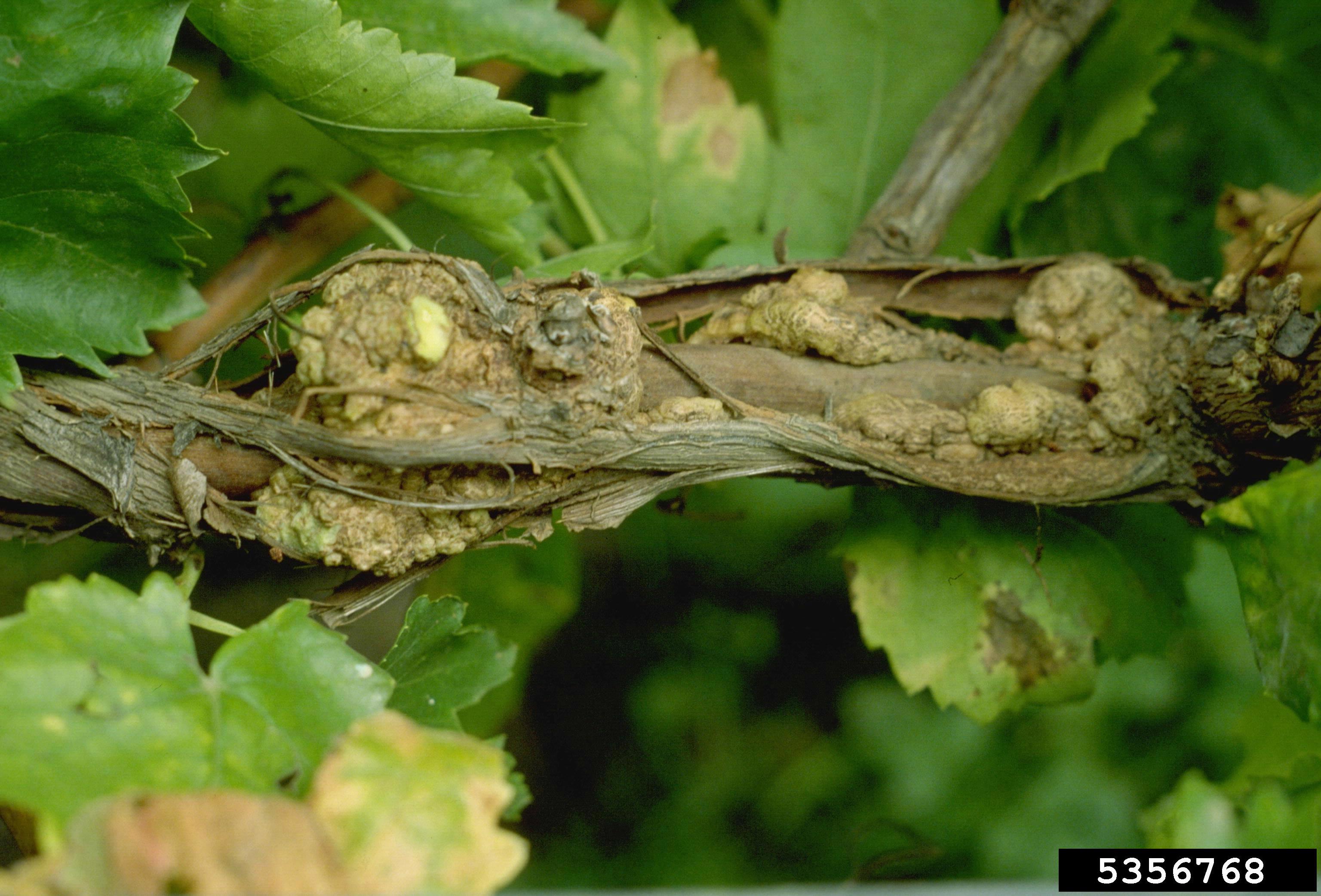
Photo citation: William M. Brown Jr., Bugwood.org
How to identify crown gall
Accurate identification is important because crown gall can be confused with other plant growths.
- Located near the crown, roots, or lower stem
- Irregular, tumor-like shape
- Woody texture in older galls
- Often associated with previous wounding
If identification is uncertain, professional evaluation is recommended before making management decisions.
Which crops and plants are affected?
Crown gall can affect a wide range of woody plants and horticultural crops. Examples include:
- Grapevines
- Roses and woody ornamentals
- Stone fruits (e.g., cherry, peach, plum)
- Pome fruits (e.g., apple, pear)
- Small fruits and berries (e.g., raspberry, blueberry)
In Canadian nurseries and orchards, the disease is a practical management issue because young stock is most vulnerable and infections can be introduced during propagation and planting.
How does crown gall spread?
The bacterium can persist in soil and plant debris. It typically spreads when contaminated soil or water contacts wounds, or when infected plant material is moved between sites.
Common risk factors include:
- Planting into infested ground
- Mechanical injury during handling or transplanting
- Grafting or pruning without proper tool sanitation
- Re-using contaminated pots, benches, or propagation equipment
Because infection requires wounds, handling practices play a major role in disease spread. Even small injuries during propagation or planting can create entry points for the bacterium.
Prevention best practices
Effective crown gall management focuses on reducing infection risk at every stage of production.
- Use clean, disease-free planting material
- Avoid unnecessary wounding during handling
- Sanitize tools and propagation equipment
- Avoid planting in known infested soil
- Control insects that may cause root or stem injury
Prevention and biological control
Because crown gall cannot be cured after infection, prevention is the most effective management strategy. This includes combining good sanitation practices with preventative biological control.
Biological control products based on Agrobacterium radiobacter strain K84 are applied before infection occurs, typically during propagation or planting. These beneficial bacteria help protect plant tissue from infection by harmful strains.
If you're evaluating biological control options, see how DYGALL prevents crown gall on the homepage and contact us for product and application guidance.
When to consider prevention
Preventative strategies should be considered in the following situations:
- Planting in soil with a history of crown gall
- Handling large volumes of nursery stock
- Propagating susceptible crops such as grapes or ornamentals
- Establishing new orchards or vineyards
Early prevention can significantly reduce long-term losses and improve plant quality.